Canadian Museum of Nature
Museum
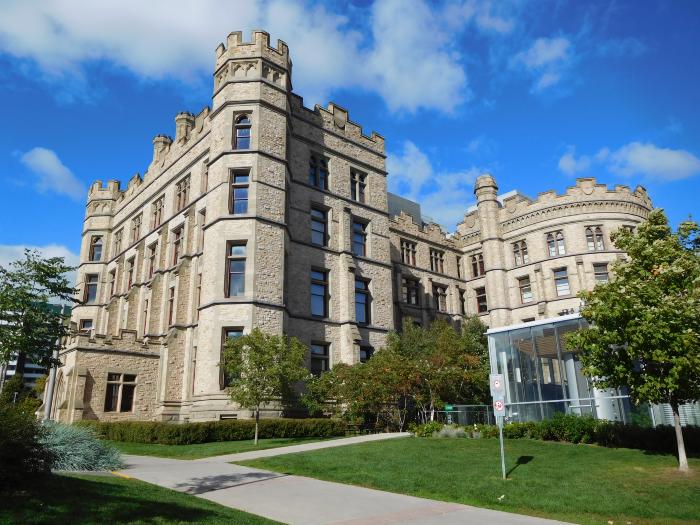
Jeangagnon, via Wikimedia Commons
https://creativecommons.org/licenses/by-nc/4.0/
https://creativecommons.org/licenses/by-nc/4.0/
- The Canadian Museum of Nature is Canada's national museum of natural history and natural sciences. Its role is to increase interest in, knowledge of, and appreciation and respect for our natural environment, throughout Canada and internationally.
- Scope of Collection
-
The Canadian Museum of Nature houses over 15 million scientific specimens at its Gatineau, Quebec campus, documenting Canada’s natural heritage. Key collections include diverse zoological specimens, over 61,000 vertebrates, extensive fossil/plant collections, and a cryogenic facility (Cryobank). These serve research in biodiversity, conservation, and evolution.
Key Collection Areas:
Zoology: The largest collection, spanning vertebrates (fish, birds, mammals) and invertebrates (molluscs, insects), with specimens dating back to the mid-19th century.
Palaeobiology: Over 61,620 vertebrate fossils (including dinosaurs), significant paleobotanical specimens (plants and fungi), and Canada’s top fossil-pollen collection.
Geological/Mineral: A vast collection of rocks, minerals, and gems.
Botany: Specimens of plants, algae, and lichens.
National Biodiversity Cryobank of Canada: A facility utilizing liquid nitrogen to preserve tissue and DNA samples for genomic and biodiversity research. - Wikipedia
- Canadian Museum of Nature [https://en.wikipedia.org/wiki/Canadian_Museum_of_Nature]
- Address
- 240 McLeod Street, Ottawa, ON, K1P 6P4, Canada
- Contact
- 1-800-263-4433
- Website
- Canadian Museum of Nature
- Social Media
- https://www.instagram.com/museumofnature/
- https://www.facebook.com/CanadianMuseumofNature/
- Accessibility
- Accessible Entrance (step-free with wide doors or ramp/automatic door)
- Accessible Washroom (includes at least one accessible stall or washroom)
- Step-Free Access (includes elevator, to all public floors)
- Accessible Parking (or drop-off zone)
- Accessible Pathways Inside (wide routes, minimal obstacles)
- Accessible Seating Areas (including space for mobility devices)
- Assistive Listening Available (hearing loop, FM/IR, or similar)
- Visual Access Supports (large print, tactile elements, high-contrast signage, or Braille)
- Service Animals Welcome
- Sensory-Friendly Supports (quiet space, sensory-friendly hours, etc.)
Related Objects
Loading...